ServicesWhole-Home Filtration
Whole-Home Filtration in Kyle
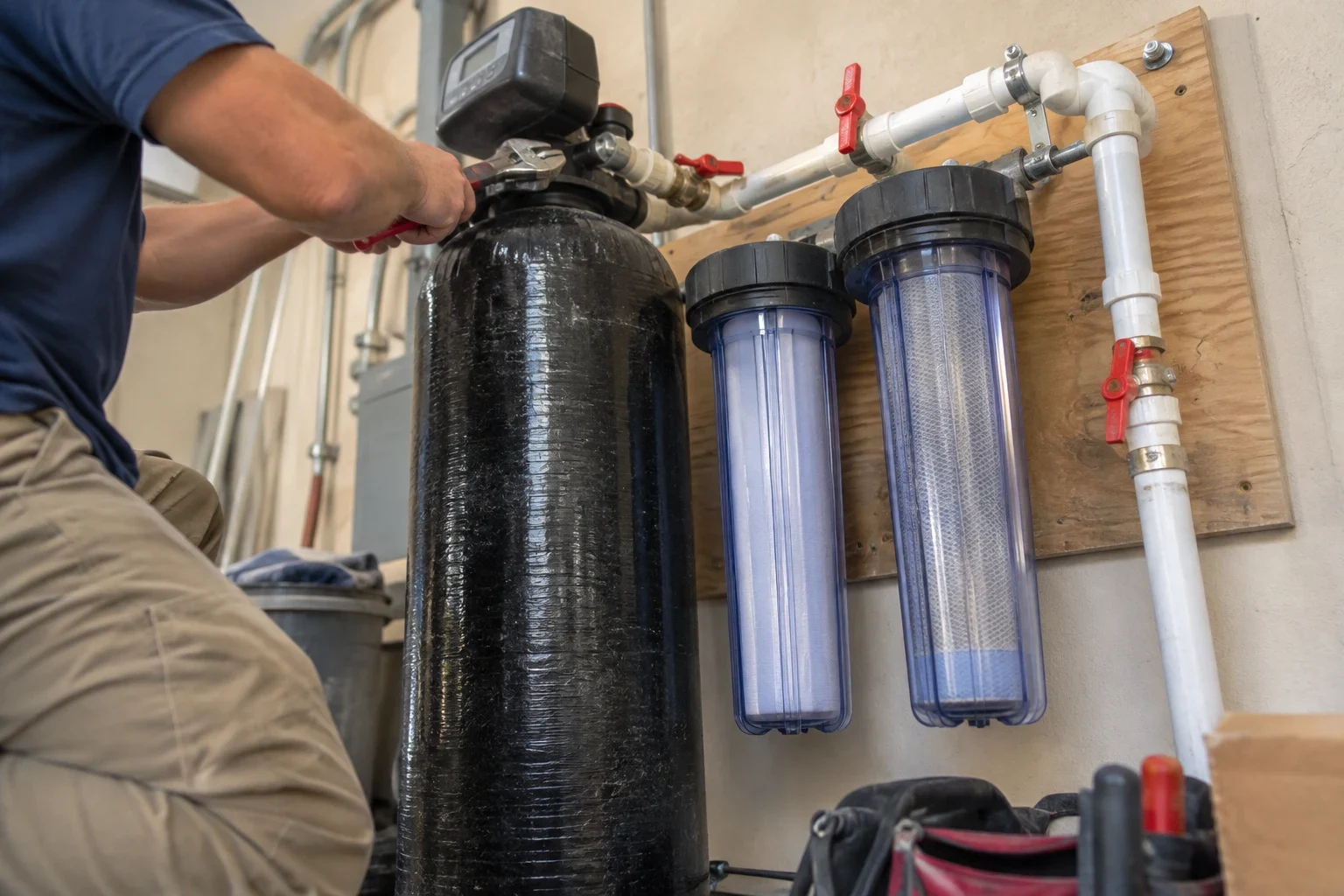
We fit a single filtration system where water enters your home, so every shower, sink and appliance gets cleaner water. We test first, size the system to your household, and show you the upkeep and replacement schedule before you decide.
One system at the main line, filtered water everywhere
A whole-home system treats water once, at the point it enters the house, rather than at a single faucet. Most use a sediment stage to catch grit and a carbon stage to take out chlorine or chloramine taste and odor. The result is water that smells and tastes better in the shower, the kitchen and the laundry.
Two systems with the same price on the box can cost very different amounts over ten years. A cartridge unit may need new filters every few months. A larger tank of catalytic carbon can run for years before the media is replaced. We lay those numbers side by side so the system you choose still makes sense long after it is installed.
Whole-home filtration is the right call when the complaint is taste, odor or sediment across the house. If the issue is scale on fixtures, our water softener installation or salt-free water conditioners pages cover that. If you only want purer drinking water, reverse osmosis systems may be the better fit.
What the work includes
- Testing comes before any recommendation
- We measure chlorine, hardness, iron and sediment from one of your taps. What we find shapes the quote, rather than a preset package.
- Sized for how your household uses water
- We tally bathrooms and fixtures so the system holds up when two showers and the dishwasher are running at once. A unit that is too small burns through its media sooner and can sap your pressure.
- Media matched to your water
- Ordinary carbon is good at removing chlorine. If the utility treats with chloramine, catalytic carbon handles it more dependably and goes longer between changes.
- A service bypass and tidy pipework
- We plumb a bypass into each system, so your taps still run while filters are swapped. Fittings are made properly, the tank is supported, and the finished work stays neat and within easy reach.
- Free installation
- Installation is free on the systems we fit. That keeps the quote focused on the equipment and what it costs to maintain, with no labor line to weigh.
- An upkeep plan in writing
- We write down when the filters or media need replacing and what each change involves, so year three holds no surprises.
Signs it is time to filter water for the whole house
Shower steam that smells like a pool
Utilities add chlorine or chloramine to keep tap water safe, and hot water releases more of that smell. A carbon stage removes most of it before it reaches the shower.
A filter on every faucet and the fridge
Buying separate cartridges for the refrigerator, a pitcher and the showerhead adds up. One system on the main line usually costs less to keep going over the years.
Clogged aerators and appliance screens
Fine grit settles in the small screens at the end of your faucets, behind the washing machine hoses and inside the ice maker. A sediment prefilter catches it before it gets that far.
Skin and hair feel dry after bathing
Plenty of people notice a change once chlorine is out of their bath water. It is about comfort rather than health, and it is one of the most common reasons we hear from homeowners.
Each tap tastes a little different
Filtering only at the kitchen sink leaves the bathrooms as they were. A whole-home system sends the same treated water to every faucet.
How a whole-home installation runs
- 1
Free water test and a look at your main line
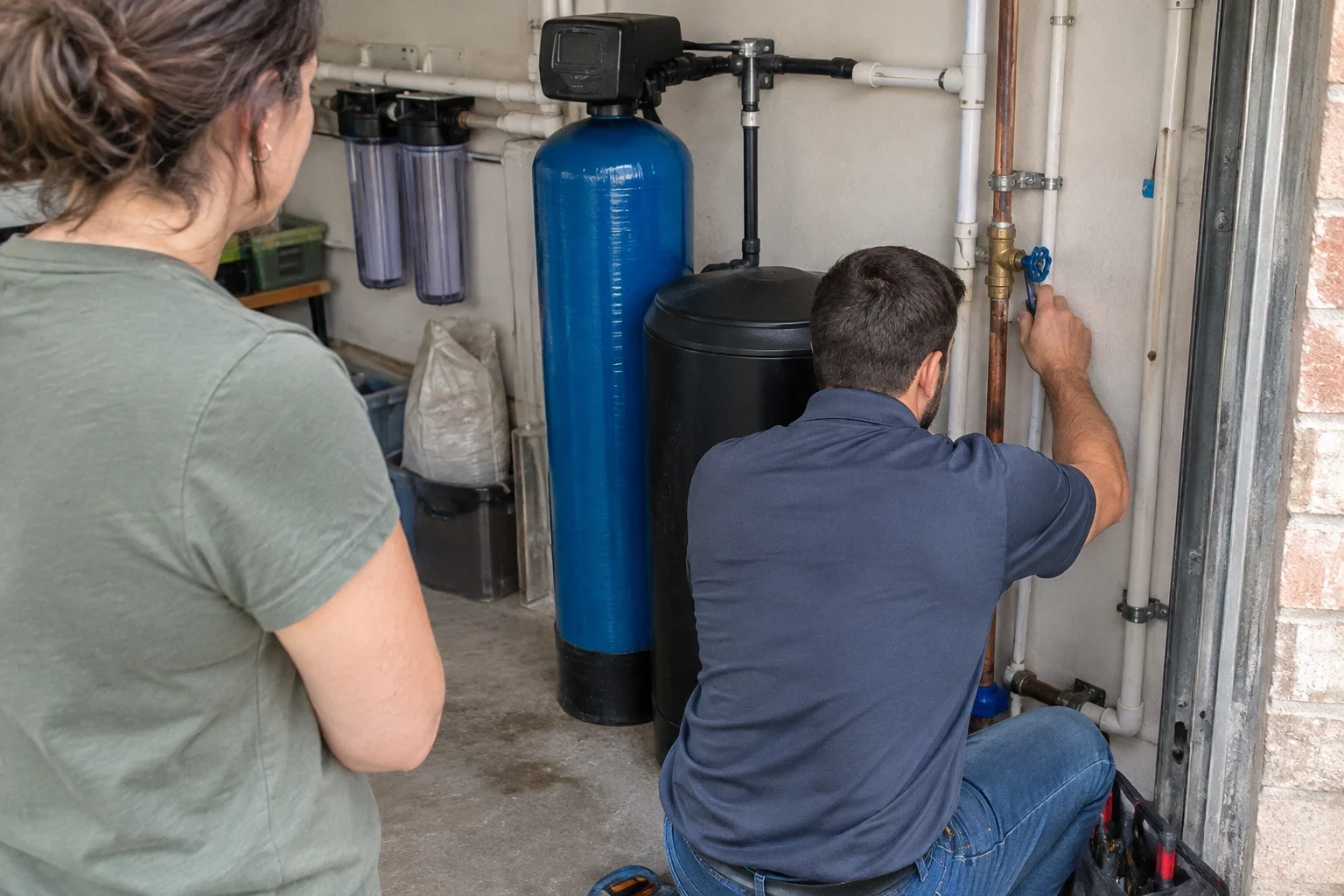
We test the water and locate where the main line enters your home, often in the garage or along an outside wall. That tells us which systems will fit and how much room to plan for.
- 2
Options laid out over the years
For each option we cover the purchase cost, how long the media should last and what replacements will cost. You get your quote by phone and in writing, with no pressure to decide quickly.
- 3
The install itself
We lay down floor covering and protect nearby walls, shut the water off, then plumb the system into the main line along with a bypass valve. In most homes the water stays off for only a few hours.
- 4
Rinse, inspect and walk you through it
The new media is flushed until the water runs clear, then we check every joint for drips and test the filtered water. We finish by showing you the bypass, the housings and the date of your next change.
What moves the cost of whole-home filtration
The price depends on the system, the size of your household and how easy your plumbing is to reach. Because installation is free, most of the difference comes from the equipment and what it costs to keep running. We quote both so you can compare fairly.
- System type and media life
- Cartridge systems cost less to buy but need frequent changes. Tank systems with catalytic carbon cost more at first and often far less per year.
- Household size and flow
- More bathrooms and more people mean a larger tank or a higher-flow housing to avoid pressure loss.
- Where the main line runs
- A main line in an open garage is simple. Lines buried in a slab or tucked behind finished walls take more fitting work and sometimes a different location.
- Extra stages
- Heavy sediment or other findings from the test may call for an added prefilter. Many Central Texas homes also have harder water, and some owners choose to pair filtration with a conditioner.
Common questions about whole-home filtration
Something not covered here? (512) 883-6514
Does whole-home filtration take care of hard water too?
It does not. Carbon and sediment stages remove chlorine, odor and grit, while the calcium and magnesium that leave scale pass through untouched. If spotting and buildup bother you, water softener installation or a salt-free water conditioner can sit alongside the filter.
Will my water pressure drop?
Not if the system is the right size for your home. A noticeable loss of pressure usually traces back to a unit too small for the number of fixtures, or a cartridge kept in well past its change date. We size for the busiest moments in your house to avoid both.
How often does the filter need changing?
It depends on the system and how much water your household uses. Cartridge units may need fresh filters several times a year, while carbon tank systems often go years before the media is replaced. Your written quote lists the schedule for the option you pick.
Do I still need a reverse osmosis system for drinking water?
Often you don't. Whole-home filtration handles taste and odor, and many households find that covers everything they wanted. If you would like an extra step for drinking and cooking water, an under-sink reverse osmosis system adds it at one tap.
Where does the system go?
On the main line just past the shutoff, which in most homes means the garage. If that spot won't work, we look at other locations during the free water test and talk through the trade-offs of each.
Start with a test, then decide
The first step is a free water test at your home. After that we set out what each system costs to buy and what it costs to keep running, so you choose with every number in front of you.