ServicesIron and Sulfur Removal
Iron and Sulfur Removal in Kyle
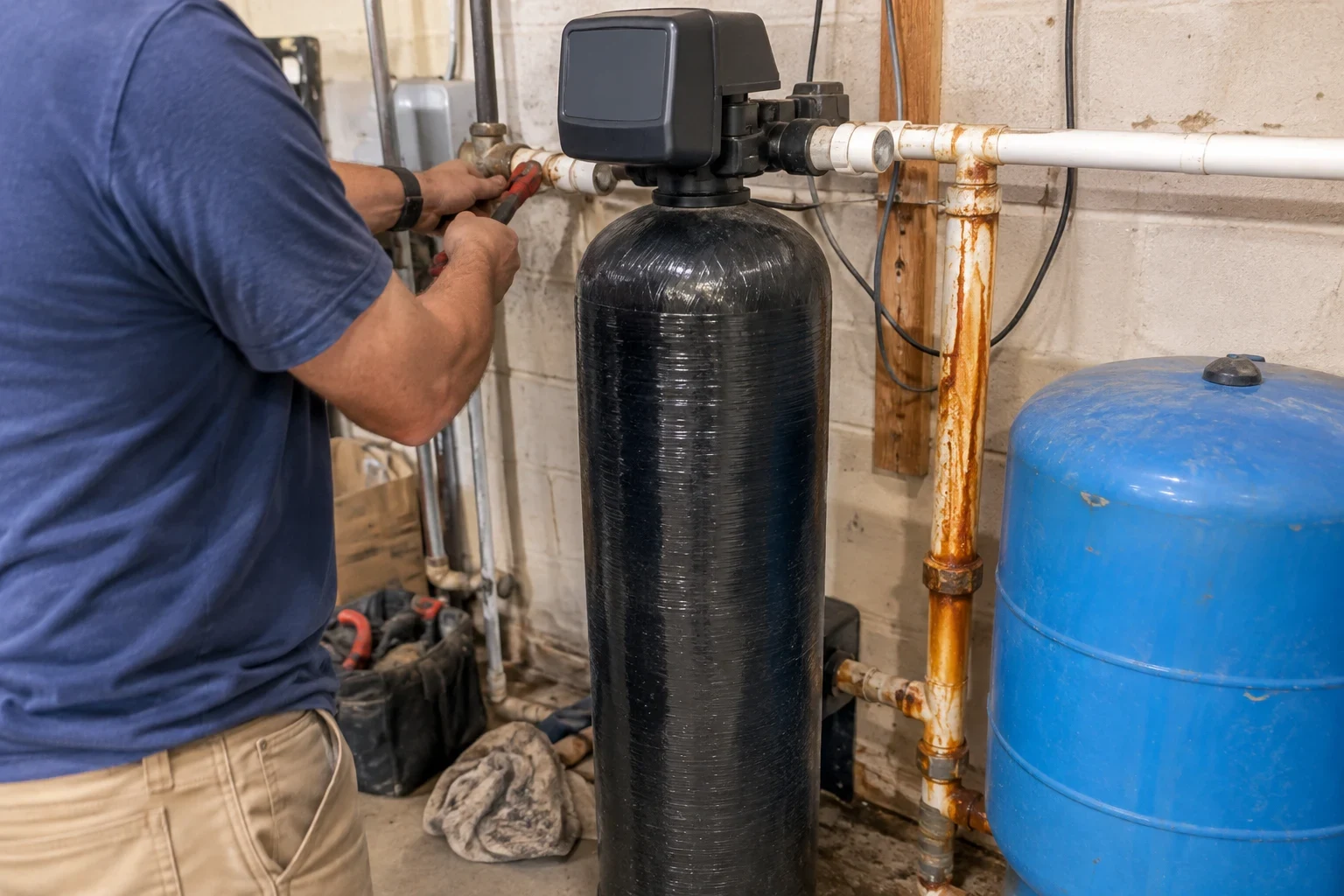
Orange streaks in the tub and a sulfur smell at the tap usually come from dissolved iron and hydrogen sulfide. We measure both, explain what we find, and fit a system you can live with for years without fuss.
What this treatment does and when it makes sense
Iron arrives dissolved and clear, then turns to rust once it meets air or bleach. Hydrogen sulfide is a gas that gives water its rotten-egg smell and tarnishes silver and fixtures. Both can be treated at the main supply line, before the water splits off toward your kitchen, bathrooms, laundry and water heater.
Not every smell is in the supply. If the odor shows up only on hot water, the cause is often a reaction with the water heater's anode rod, and a filter will not fix that. We check for this before recommending anything, because the right answer is sometimes a twenty-minute part swap.
When treatment is the right call, we compare systems by what they cost to buy and what they cost to keep. A filter that regenerates with air needs little beyond a periodic check. One that relies on chemical feed may treat heavier loads but asks for refills. You see both sides before you choose.
What the work includes
- Iron, manganese and sulfur measured
- We test for iron, manganese, hydrogen sulfide and pH, since pH decides which filter media will actually work. You get the numbers in writing.
- An honest fit for your water
- Air-injection oxidizing filters suit most moderate iron and sulfur levels. Heavier sulfur may call for a catalytic carbon stage or a contact tank. We explain why one fits and the others do not.
- Careful installation
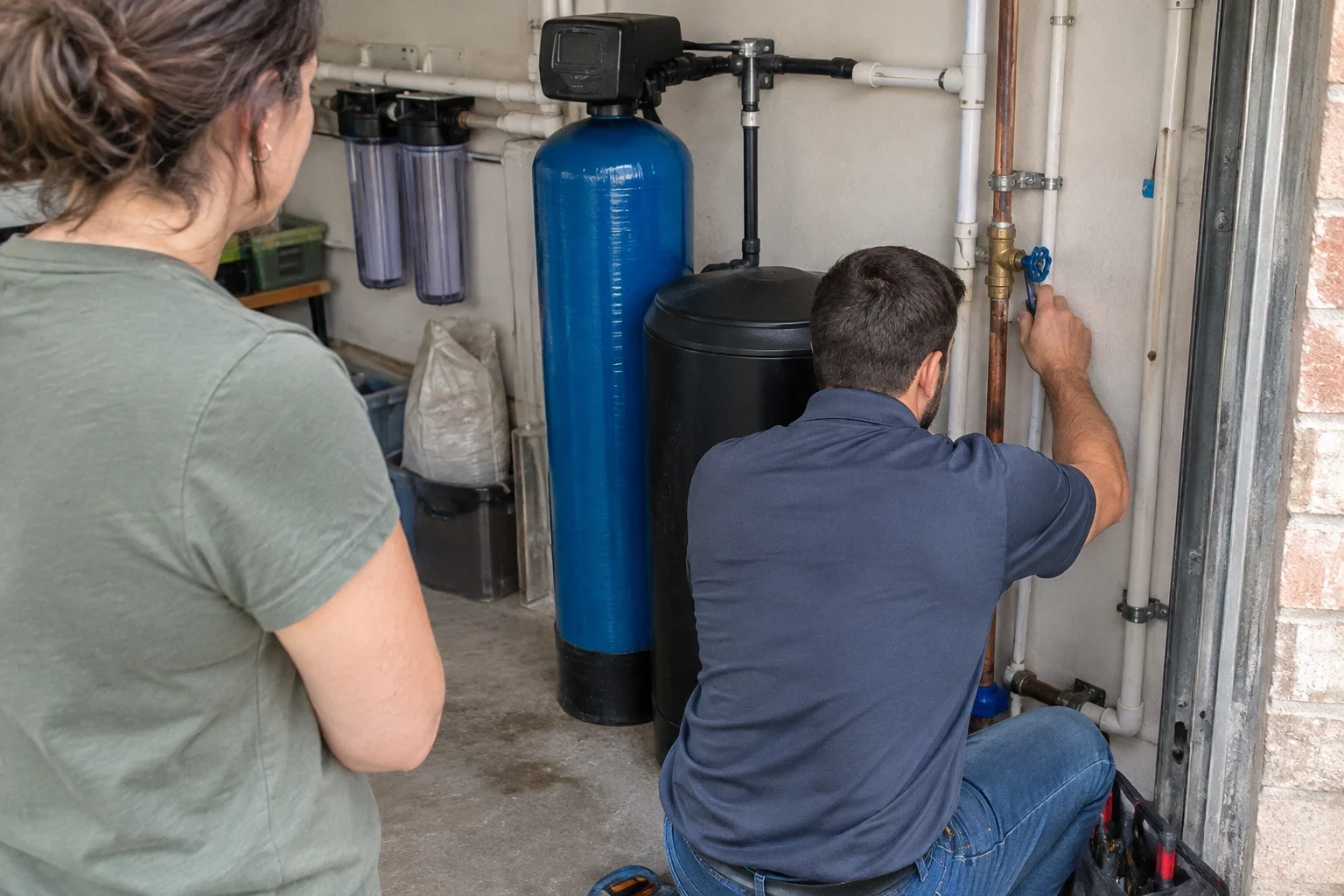
- The system is mounted at your main line with a bypass valve, so the filter can be taken offline for maintenance and your taps still run. We set the backwash drain properly, protect floors in the work area and leave the space clean.
- Free installation
- Installation is free. Your quote covers the equipment itself, with nothing tucked into labor.
- Settings matched to your household
- We program the backwash schedule to your water use and contaminant levels, so the media stays clean without wasting water.
- A clear upkeep plan
- Before we leave, you know what the system needs, roughly how often, and what to watch for. Most owners spend very little time on it.
Signs iron or sulfur is in your water
Orange or brown stains
Rust rings form in toilets, sinks and tubs, and return quickly after cleaning. Light-colored laundry can pick up a yellow cast.
A rotten-egg smell
Hydrogen sulfide is noticeable at very low levels. If it is present on both hot and cold taps, the supply is the likely source.
Water that clears, then clouds
Dissolved iron can look fine in the glass and turn rusty after it sits a while.
Black specks or dark staining
These usually point to manganese. It tends to show up alongside iron, and an oxidizing filter handles both.
Metallic taste in coffee and tea
Iron changes the flavor of anything brewed and can leave a film on the cup.
Clogged aerators and slimy tank residue
Reddish slime in a toilet tank can signal iron bacteria, which changes how we treat the water.
How a job runs, from test to clear water
- 1
Test and talk it through
We test your water at the tap and go over the results with you. If the problem is your water heater rather than your water, we tell you so.
- 2
Written quote with lifespan in view
Your quote lists the equipment, the media and the expected upkeep, so you can weigh price against years of service.
- 3
Installation day
We close the main valve, connect the system, fit the bypass and route the backwash line to a suitable drain. Your taps are off for a stretch of the visit, not the whole of it, and we let you know before the water goes off.
- 4
Startup and first backwash
We flush the new media, set the controls and retest a sample so you can see the change before we leave.
What shapes the cost
Price depends mostly on how much iron and sulfur your water carries and how much water your home uses. Higher levels call for larger tanks or extra stages. We weigh the purchase against the media life and ongoing upkeep so the choice still makes sense years from now.
- Contaminant levels
- Light iron can be handled by a single oxidizing filter. Heavy sulfur or iron with bacteria may need a second stage or chemical feed.
- Household flow rate
- Tanks are sized so pressure holds up when the shower and washer run together. Undersizing saves money only until the media fouls early.
- Type of oxidation
- Air-based systems cost little to run. Chemical feed systems treat tougher water but add refills to the yearly picture.
- Plumbing at the entry point
- Space, drain access and the condition of existing pipe can change how the install is laid out.
- Added treatment
- Some homes pair this with whole-home filtration or a reverse osmosis system at the kitchen sink. We only suggest it when your results support it.
Questions about iron and sulfur removal
Something not covered here? (512) 883-6514
Will a water softener take care of iron?
A softener can remove small amounts of dissolved iron, but iron fouls the resin over time and softeners do nothing for sulfur odor. A dedicated iron and sulfur filter usually lasts longer and costs less to keep running. If your water is also hard, we can talk about water softener installation as a separate step.
How do I know the smell isn't just my water heater?
Run cold water and smell it, then do the same with hot. If only the hot water smells, the anode rod reacting with the water is a likely cause. We check this during testing before quoting any filter.
How much upkeep does an iron filter need?
Air-injection systems clean themselves on a set backwash schedule, and the media typically lasts several years before replacement. Chemical feed systems need periodic refills. We walk you through the specific schedule for the system you choose.
Will I lose water pressure?
A correctly sized system should not cause a noticeable drop. We size the tank to your home's peak use, which is the main reason we ask about bathrooms and household size.
Do you need to retest after installation?
We test a sample at startup so you can see the result right away. If your source changes over time, a follow-up test through our water testing and analysis service shows whether settings need adjusting.
Find out what is in your water first
A short test tells us whether you need a filter, a water heater fix or nothing at all. From there we give you a clear quote and explain what the system will ask of you over the years.