ServicesWater Testing & Analysis
Water Testing & Analysis in Kyle, TX
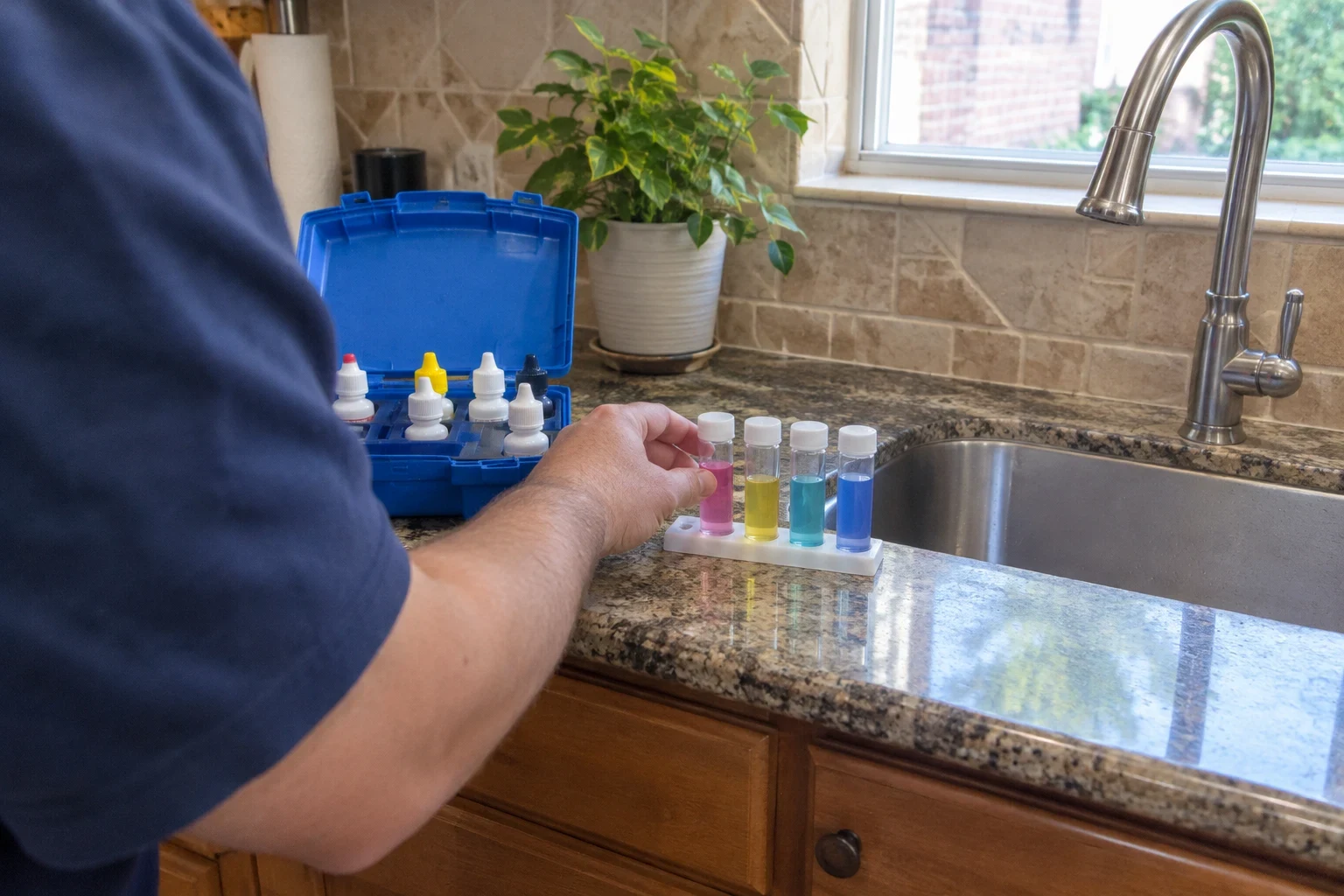
We test the water at your tap before anyone talks about equipment. You see the readings for hardness, chlorine, dissolved solids and pH. Then we explain what they mean for your plumbing, your appliances and the cost of running any system for years.
Real numbers first, equipment second
Testing costs you nothing, yet it decides how well every later purchase works out. A softener, a conditioner or a reverse osmosis unit chosen without readings is an educated guess at best. Over ten years of salt, filters and repairs, a wrong guess usually costs far more than it seemed to save at the start.
Hardness tends to be the first thing people ask about, since much of Central Texas draws on limestone, but it seldom tells the full story. A strong chlorine taste, a high dissolved-solids figure or a pH that leans one way can change the recommendation entirely. We measure, walk you through the results, and say so plainly when your home needs just a carbon filter, or no treatment at all.
There is no charge for the in-home test and no expectation that you buy anything afterward.
What a test covers
- Hardness in grains per gallon
- We measure calcium and magnesium as grains per gallon, the figure that softener and conditioner sizing depends on. A system sized to the real number uses less salt, less water and fewer media changes over its life.
- Chlorine and chloramine
- Disinfectant is the most common reason people dislike the taste of tap water. We check the level so a carbon filter can be matched to it, since chloramine calls for a different grade of carbon than plain chlorine.
- Dissolved solids and pH
- Total dissolved solids tell us how much is in the water overall. pH shows whether it leans corrosive or scale-forming. Together they help predict how fixtures and a water heater will hold up.
- Iron and sulfur checks
- Orange staining or a rotten-egg smell gets a closer look. These usually need dedicated treatment rather than a general filter.
- A written record
- You keep every reading in writing, with the normal range beside it. It stays useful later, if you buy from us, from someone else, or simply want a baseline to compare against next year.
- Lab referral when it matters
- Some questions, like lead from older plumbing, deserve a laboratory rather than a field kit. We tell you when that is the case and help you collect the sample correctly.
When a water test is worth scheduling
Chalky buildup on faucets and glass
A white film on shower doors, faucet aerators and dishwasher racks points to hardness worth addressing. The reading tells us how serious it is.
A swimming pool taste at the tap
Chlorine flavor or smell is common and generally harmless, but it keeps many people reaching for bottled water. Knowing the level lets us pick carbon that removes it properly.
Cloudy glasses and scratchy towels
Hard water fights soap, so you add more detergent and still see residue. A test shows whether minerals are really to blame.
A noisy or short-lived water heater
Mineral sediment collects at the bottom of the tank, coating the burner or element so it works harder and wears out sooner. Before replacing a heater that failed early, find out what the water is doing to it.
Discoloration or a sulfur smell
Rust-colored rings in toilets, or a rotten-egg odor that comes only from hot taps, can mean iron or a reaction inside the water heater. Testing tells the two apart.
An equipment proposal on the table
If you have already been quoted for a system, get the water measured first. That is the surest way to confirm the type and size actually suit your home.
What affects the cost
The in-home water test itself is free. Costs come in only if you want an independent lab report or decide to treat your water, and in both cases we explain them before anything is ordered. These are the factors that move those numbers.
Which lab panel you need
A single question, such as lead, is a smaller panel than a broad screen of metals and minerals. We suggest the narrowest test that answers your question.
What the readings show
Moderate hardness may need only a salt-free conditioner, while high hardness with iron calls for something more capable. The test sets the scope, not a sales sheet.
Household size and water use
A system for two people and one for six differ in tank size, flow rate and how often media is replaced.
Long-term upkeep
Filters, salt, membranes and UV lamps each run on a replacement schedule. We price those running costs next to the purchase so you can compare options over their full life.
What happens during the visit
- 1
Book by phone
Describe what has caught your attention, whether it is taste, scale or staining, and we find a visit time that works for you. Holding off on the dishwasher and laundry for a little while beforehand gives us cleaner readings.
- 2
Draw samples from two points
We take water from the kitchen faucet and from a spot ahead of any filter you already have, so we see it as it arrives at your home. If equipment is in place, a third sample after it shows whether that system is still earning its keep.
- 3
Go over the readings with you
Most results are ready within minutes. We explain each figure in everyday terms and flag anything that would be better answered by a laboratory.
- 4
Weigh options across their whole life
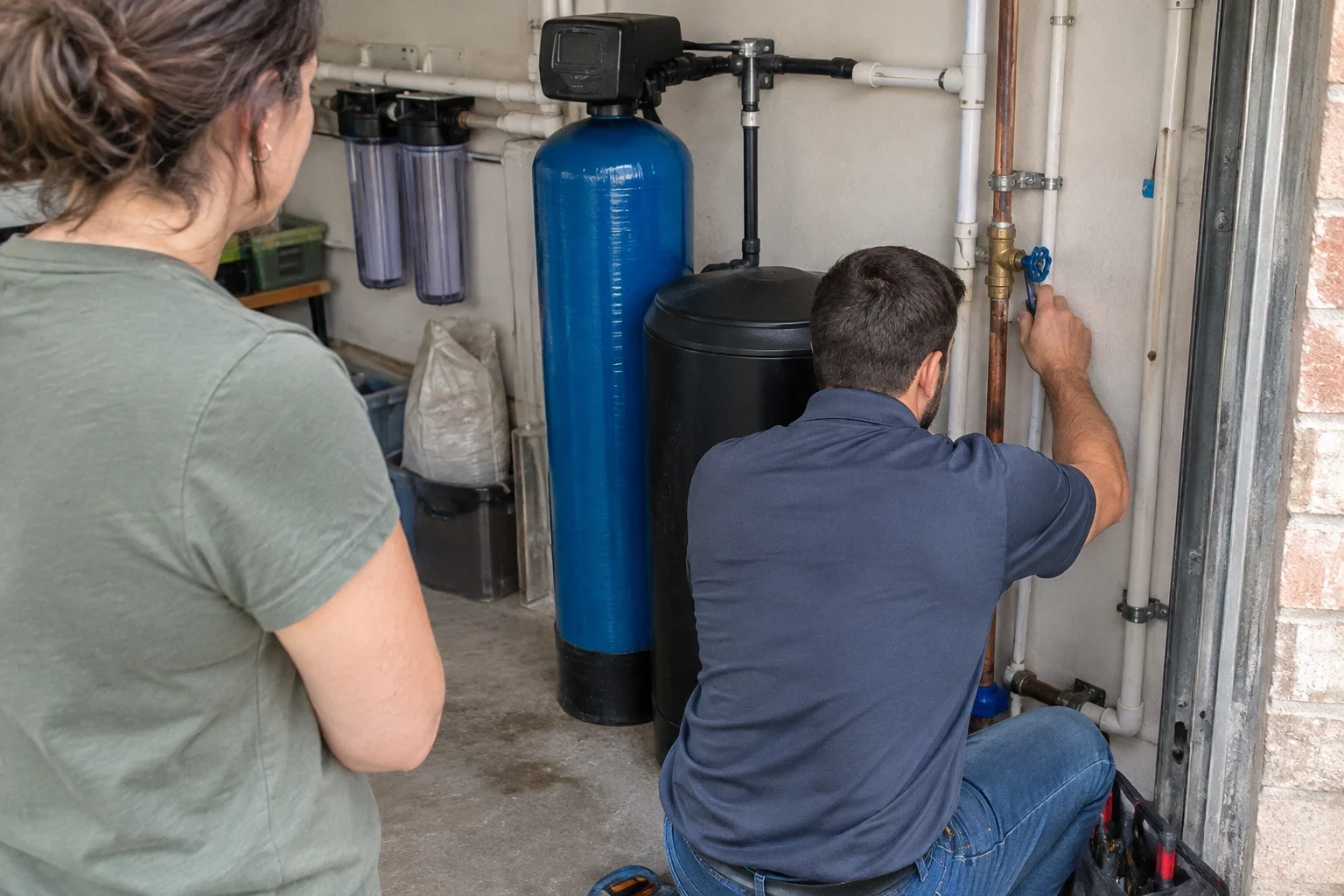
When treatment makes sense, we set the suitable systems next to each other: purchase price, expected lifespan, and the yearly cost of filters, salt or media. Installation is free on systems we install, and you are welcome to keep the results and take your time deciding.
Water testing questions
Is the water test really free?
Yes. The in-home test costs nothing and does not commit you to anything. We tell you what we found and what we would do, and the decision stays with you.
Can't I just read the city's water quality report?
The annual report is a good place to start, but it describes water at the source and across the whole system. It does not show what comes out of your faucet after your pipes, your water heater and any equipment you already own. A test at your tap fills that gap.
How long does a visit take?
Plan on about an hour, including time to go over the results with you. If you already have a softener or filter, we add a reading after it, which takes a few extra minutes.
Do you test for lead?
Field kits are not precise enough for lead. If your home has older plumbing or you have a specific concern, we help you arrange a sample for an independent laboratory and walk you through the report when it comes back.
Will you push me toward a water softener?
Not if the numbers do not support it. Many homes do well with a salt-free conditioner or a carbon filter, and some need nothing. We would rather recommend a smaller system that lasts than one that costs more to run than it should.
Should I test again later?
Water supplies change over time as utilities adjust their sources, and household plumbing ages. Retesting every year or two, or whenever taste or scaling changes, keeps any system set correctly and shows when a filter is wearing out.
Start with the numbers
A free test at your tap gives you a clear baseline and an honest view of what, if anything, your water needs. We work in Kyle, Buda, San Marcos and the surrounding area.