ServicesWater Softener Installation
Water Softener Installation in Kyle
We install water softeners sized to your home's measured hardness and daily use, so the system regenerates only when it needs to. Before you choose, we lay out the up-front cost next to salt, upkeep and expected lifespan, so the decision still makes sense years from now.
How a softener works and when it pays off
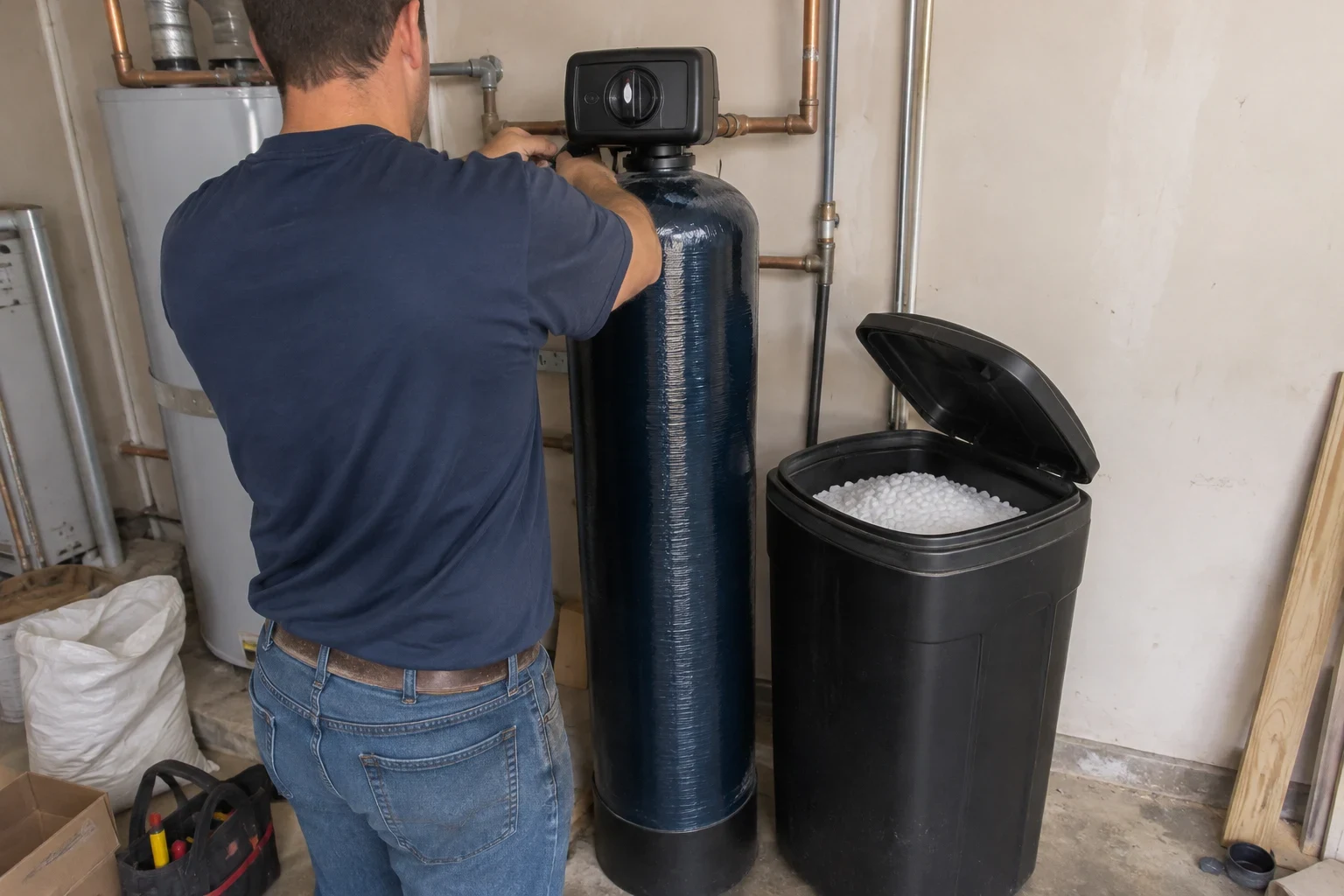
Scale in pipes, fixtures and appliances comes from calcium and magnesium, and a softener removes both. Inside the mineral tank, resin beads trade those minerals for sodium or potassium. When the beads have taken on all they can hold, the control valve rinses them with a salty brine solution drawn from the second tank, which restores their capacity for the next round.
A softener is the right choice when testing shows real hardness and you want scale stopped, not just reduced. Hard water is common across Central Texas, but the number still varies from house to house, so we test before recommending anything. If your reading is on the mild side, a salt-free water conditioner may cost less to own, and we will tell you that directly.
The true cost of a softener shows up over the years it runs. A well-sized unit with a metered valve uses less salt and water each week, and across its service life those savings add up to more than a small difference in purchase price.
What comes with every softener we install
- A hardness reading first
- We measure hardness at your tap and check for iron before any equipment is discussed. Those numbers set the grain capacity and the regeneration schedule we program.
- Capacity matched to your household
- We size the tank from your hardness, the number of people at home and your heaviest water use. An undersized unit regenerates too often and wears out early, while an oversized one means paying for resin that never gets used.
- A metered control valve
- We favor a valve that tracks actual gallons and starts regeneration only when the resin is used up. That keeps salt and rinse water in step with what your home really draws.
- A tidy tie-in to your plumbing
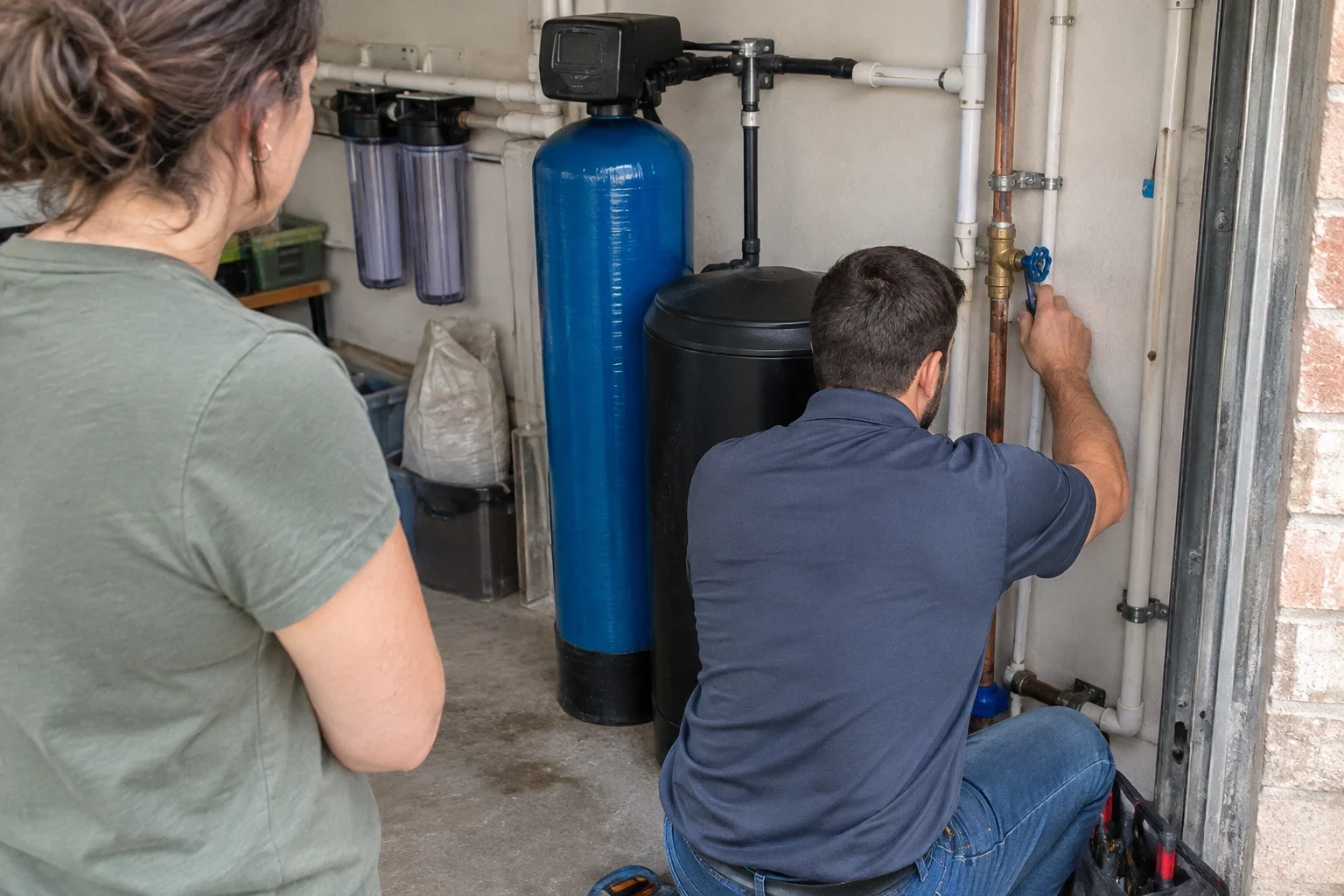
- Many newer homes already have a softener loop, and if yours does, we connect to it. Where there is none, we plan the connection on the main line, add a bypass so the unit can be taken offline, and run the drain to a fitting with a proper air gap.
- Setup and a short lesson
- We program your hardness, capacity and regeneration time. Then we walk you through topping up the brine tank, using the bypass valve and reading the control display, so you know what normal operation looks like.
When hard water starts showing up around the house
Chalky buildup that keeps returning
White, crusty deposits on faucets, showerheads and glass shower doors that come back within days of cleaning point strongly to hard water.
Cloudy glasses and spotted dishes
A dull film after the dishwasher cycle, even with rinse aid, is usually mineral left behind as the water dries.
A water heater that crackles or pops
Hardness settles as sediment at the bottom of a tank heater, and water heating through that layer makes the noise. The sediment also wastes energy and cuts the heater's working life short.
Soap that barely lathers
Minerals react with soap, so you use more shampoo and detergent and still feel a film on skin and laundry.
Appliances needing early repairs
If your ice maker, dishwasher or tankless heater needs descaling or service sooner than expected, hardness is a frequent cause.
How installation day runs
- 1
Confirm the plan
We go over your test results, the equipment we sized and the spot where it will stand. The plan stays as we agreed by phone unless you approve a change.
- 2
Protect the work area
We cover the floor in the garage or utility space, then close the main shutoff. Your water will be off for a stretch while we work, and we give you notice first.
- 3
Set and connect the system
The mineral and brine tanks go on a level surface, then we join the inlet, outlet and bypass and lay out the drain line. We pressure-check each joint before the next step.
- 4
Start up and test
We add water to the brine tank, run the first regeneration and test softened water at a faucet, so you can compare the reading with the one we took before.
- 5
Clean up and hand over
Boxes and old parts leave with us, the area gets wiped down, and we review salt and settings with you before heading out.
What shapes the cost of a softener
Free installation is part of our offer, so your quote centers on the equipment itself and any added parts your plumbing calls for. We also show you what the system should cost to run each year, because salt and water use matter as much as the purchase price over time.
- Grain capacity
- Harder water and larger households need more resin. Correct sizing keeps regeneration less frequent and the resin lasting longer.
- Control valve type
- A metered valve costs a little more than a basic timer but typically saves salt and water every week it runs.
- Existing plumbing
- A ready softener loop keeps the job simple. Without one, the tie-in on the main line adds parts such as fittings, a bypass and drain routing.
- Salt or potassium
- Potassium chloride works in place of salt but costs more per bag. We help you weigh that ongoing difference before you decide.
Water softener questions
Something not covered here? (512) 883-6514
Should I get a softener or a salt-free conditioner?
Your test results decide it. A softener pulls hardness minerals out of the water and ends scale, while a salt-free conditioner changes how those minerals behave so less of them cling to surfaces, and there is no salt to buy. With moderate hardness, the conditioner can be the cheaper system to own. With higher hardness, a softener usually pays for itself.
How much upkeep does a softener need?
Most of it is keeping salt in the brine tank, often one or two bags a month depending on your hardness and water use. The brine tank also benefits from an occasional cleanout. A metered valve keeps salt use lower, and we show you how to check the level so the tank never sits empty.
Will softened water taste salty?
For most homes, no. The sodium a softener adds rises and falls with how much hardness it takes out, and at ordinary hardness levels it is rarely noticeable. If you would rather keep it low, potassium chloride can replace salt, or a reverse osmosis system at the kitchen sink can handle drinking water.
Does a softener remove chlorine or improve taste?
No. A softener only deals with hardness minerals. Chlorine taste and odor call for whole-home filtration with carbon, and many homes pair the two, with the filter placed before the softener.
How long does the resin last?
Resin usually serves for many years, though chlorine and heavy iron can wear it down sooner. Once capacity falls off, the resin can often be swapped on its own while the tanks and valve stay in place, which holds down long-term cost.
Find out what your water needs first
A hardness test tells us whether a softener is worth it for your home and how to size it. Call and we will set up the test and talk through cost, salt and upkeep before you commit to anything.